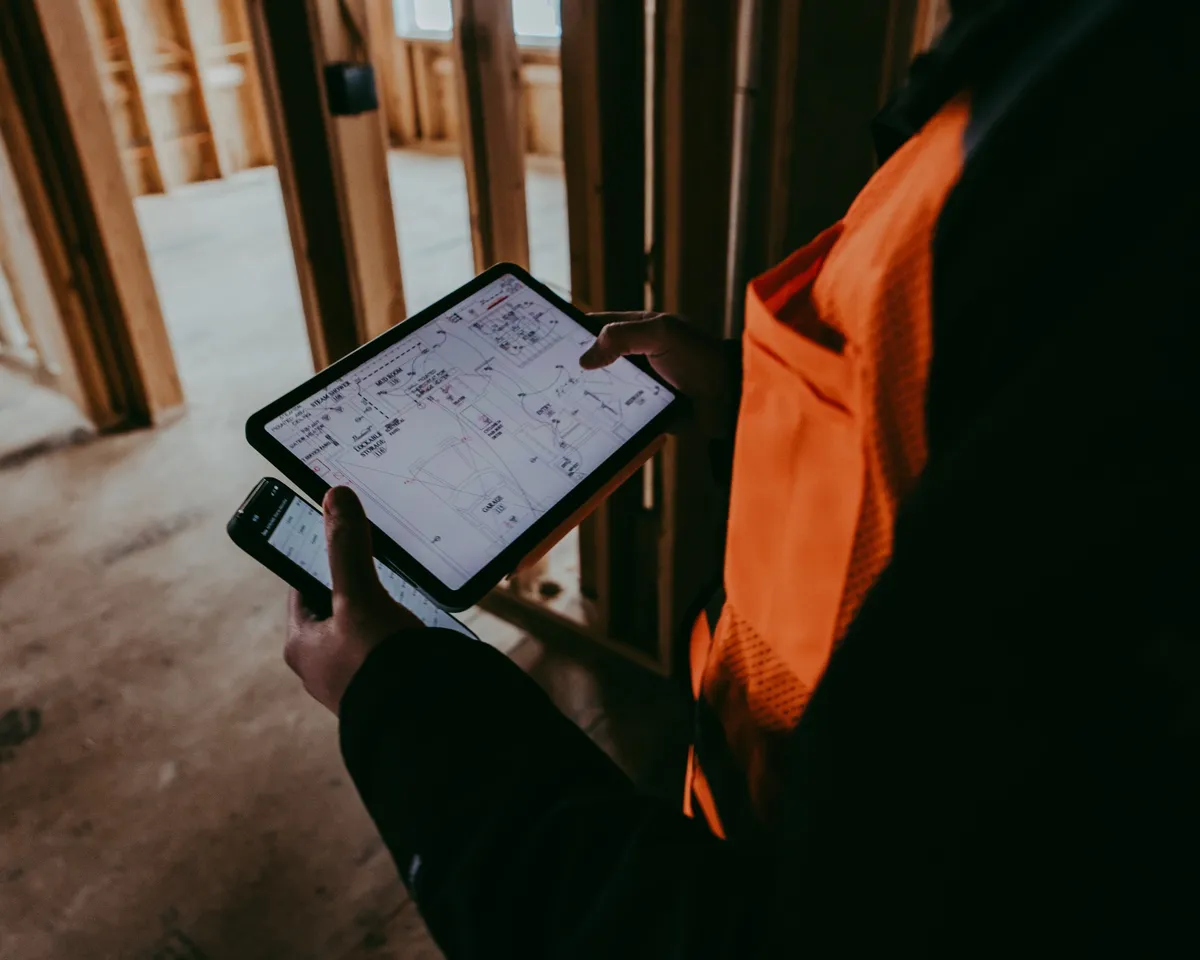
How AI is Changing Construction
Construction has spent the last decade watching other industries get reshaped by artificial intelligence while its own workflows stayed stubbornly manual — spreadsheets, paper punch lists, and phone calls to the site trailer. That's changing fast. AI-powered tools now touch everything from bidding and scheduling to safety monitoring and progress tracking. But like any new technology entering a complicated, high-stakes industry, these tools come with real strengths and real limitations. Understanding both is the difference between a smart investment and an expensive distraction.
Where AI Construction Software Excels
Faster, more accurate estimating. Takeoff and estimating used to eat days of an estimator's time. AI tools can now scan plans, automatically identify quantities, and generate a first-pass estimate in a fraction of that time — freeing estimators to focus on judgment calls rather than manual counting.
Predictive scheduling. Traditional scheduling assumes a static plan. AI-driven scheduling tools ingest live data — weather, material delivery delays, subcontractor performance history — and continuously recalculate the critical path, flagging risks before they become missed deadlines.
Computer vision for safety and progress. Cameras paired with AI can now scan a job site and flag missing PPE, unsafe conditions, or work that's fallen behind plan — automatically and continuously, rather than relying solely on periodic manual walkthroughs.
Document and RFI management. Generative AI is good at digesting huge volumes of unstructured text. It can summarize submittals, cross-reference contract language, and answer "where does the spec say..." questions in seconds instead of hours of digging through binders.
Cost forecasting. By training on historical project data, AI models can flag cost overruns earlier — sometimes weeks before a human project manager would notice the trend in the numbers.
Where AI Construction Software Falls Short
Data quality is the bottleneck. AI is only as good as what it's fed. Many construction firms still have fragmented data spread across disconnected systems, paper records, and tribal knowledge in people's heads. Feed a model bad or incomplete data and it will confidently produce bad or incomplete answers.
It doesn't understand physical reality the way a superintendent does. A model can flag a schedule conflict, but it doesn't know that the concrete crew and the electrician have a personal beef, or that a particular inspector is notoriously slow. Site nuance still requires humans.
Integration friction. Many of these tools don't talk to each other well. A company using one AI tool for estimating, another for scheduling, and a third for safety monitoring can end up with more disconnected data silos, not fewer — unless real thought goes into the tech stack.
Cost and training overhead. For small and mid-sized firms, the license fees, implementation time, and staff training required can be a real barrier, especially when the ROI isn't obvious in the first few months.
Trust and adoption. Construction is a relationship- and trust-driven industry. Field crews and veteran superintendents are often (rightly) skeptical of a tool telling them what a camera "saw" or what a model "predicts." Getting buy-in takes time and requires the tool to actually be right, consistently.
The Bottom Line
AI construction software isn't a magic fix, and it isn't hype either. It's a genuine productivity multiplier in specific areas — estimating, scheduling, document review, and site monitoring — but it works best as an assistant to experienced people, not a replacement for their judgment. The firms getting the most value are the ones that pick a focused problem to solve first, get their underlying data in order, and expand from there rather than trying to overhaul everything at once.